
Rio Tinto announced a two-year agreement with Amazon Web Services (AWS) that will see AWS become Nuton Technology’s first customer following an industrial-scale deployment of the bioleaching technology at Gunnison Copper’s Johnson Camp mine last month.
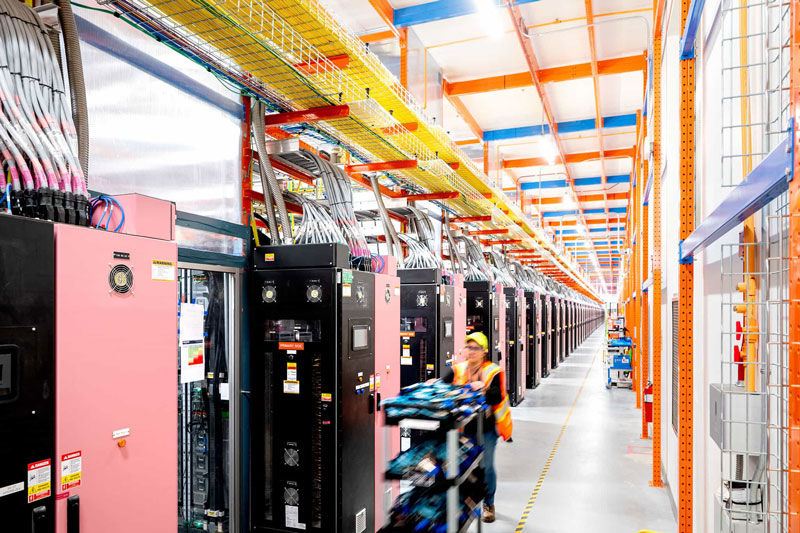
AWS will use the first Nuton copper ever produced in components of its U.S. data centers, while also providing cloud-based data and analytics support to accelerate the optimization of Nuton’s proprietary technology. Nuton, a Rio Tinto venture, will utilize AWS platforms to simulate heap-leach performance and feed advanced analytics into its decision systems, allowing for optimized acid and water use while improving predictions for copper recovery.
“This collaboration is a powerful example of how industrial innovation and cloud technology can combine to deliver cleaner, lower-carbon materials at scale. Nuton has already proven its ability to rapidly move from idea to industrial production, and AWS’s data and analytics expertise will help us to accelerate optimization and verification across operations,” said Rio Tinto Copper Chief Executive Katie Jackson.
“Importantly, by bringing Nuton copper into AWS’s U.S. data-center supply chain, we’re helping to strengthen domestic resilience and secure the critical materials those facilities need, closer to where they’re used. Together we can supply the copper critical to modern data infrastructure while demonstrating how mining can contribute to more sustainable supply chains.”
Nuton’s modular bioleaching system works by extracting copper from primary sulphide ores using naturally occurring microorganisms. This approach, combined with digital tools, enables rapid scaling and tailoring of the technology to different ore bodies, reducing the pathway from concept to production.
The process produces 99.99% pure copper cathode at the mine gate, noted Rio Tinto, and removes the need for traditional concentrators, smelters and refineries, significantly shortening the mine-to-market supply chain. Nuton is projected to use substantially less water and have lower carbon emissions compared with conventional concentrator processing routes, while also recovering value from ore previously classified as waste.
Source: Rio Tinto